How to become a Super-Ager like my Mom

Last year, my mom ran a whole city block in Brooklyn. This may not seem exceptional – until you learn she was 92 years old.

How does she remain so agile and healthy for her age? She’s what people in the medical community refer to as a super-ager: someone in their 70s and 80s who has the mental or physical capability of people far younger. There are both cognitive super-agers and physical super-agers.

Cognitive Superagers:

What’s happening in the brain of a cognitive super-ager? The parts of the brain responsible for emotion, language, stress, regulating internal organs, and coordinating sensory input into a cohesive experience are thicker in super-agers than they are in normal aging brains. The thicker these regions of the brain, the better a person will perform on tests of memory and attention.

Cognitive super-agers likely achieve their boosted brain power by embracing challenges and problems as things they can succeed at, while non-super-agers will often give up. Researchers speculate that super-agers have a higher than average tolerance for discomfort and are willing to push through the difficulty associated with learning a new skill.

Physical Super-agers: 

A key indicator that someone is a physical super-ager is their aerobic capacity – the amount of oxygen they can breathe in and distribute to their tissues in one minute. Most people lose 10% of their aerobic capacity every decade after age 30. But people in their 80s who exercise at high intensity for 20-45 minutes every day have an aerobic capacity that closely mimics people 30 years younger.

What Does This Teach Us About Our Biological Age?

When you think of your “biological age,” you may think of online quizzes or scare-tactic articles to get you to book a doctor’s appointment or try a juice cleanse. But the truth is far more optimistic – you have a say in your biological age. While your chronological age is etched in stone, your biological age is based on specific actions and choices that you can begin cultivating today.

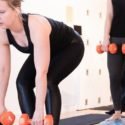
Young people in United States using their free time to do some sports or physical activity.

Specifically, you can consistently take on new challenges, pushing through the discomfort until you begin to improve, and incorporating at least 30 minutes of high-intensity exercise into your daily routine.

Want to find out more about reducing your biological age and becoming a super-ager? Join us in The Aligned Life.

A simple technique for optimizing your wellness

The last few months have been challenging to say the very least. And it’s got us thinking about what it really means to optimize your wellness. Even when things are “normal,” it’s hard to eat all the right foods, not eat any *bad* foods, exercise frequently enough, but allow time to recover, get sound sleep and find time to relax, de-stress and refuel. But with the ground shifting seemingly every day, optimizing wellness really needs to be looked at in a slightly different light.

There’s a fascinating concept that is often used to refer to chiropractic: salutogenesis.

Screen Shot 2020-06-27 at 6.16.26 PM.jpeg

Salutogenesis means “creation of health.” A salutogenic approach to wellness looks at health as on a continuum between “dis-ease” and “ease.”

{Click here for an explanation of the diagram.}

We know that forces beyond our control often contribute to dis-ease. But rather than focusing our attention there, in a salutogenic approach we seek to add things that benefit our health positively. When we are committed to this long term approach, we understand that the positives we add to our health repository will change throughout our lives.

The magic of practicing this approach is that we create a coherent mindset of healthfulness. Of course, we can still get sick. However, our bodies will have years of resources to draw on to fight dis-ease through our immune system and organ reserves.

There are three primary principles of this approach:

  1. Wellness is a dynamic balance.

  2. When it comes to wellness, a little bit of all the right things are more important than a lot of any one thing. (Diversity is key.)

  3. The story you tell about your wellness is as important as the actions you take.

Salutogenesis is really both a mindset and method. Learning to practice a salutogenic approach to wellness is something that sticks with you for your whole life. You will never unlearn or forget it. It informs your choices and allows you to manage stressful times, when it becomes more challenging to maintain regular habits.

Published July 2, 2020

A message to the Align Brooklyn community


To our wonderful community:

We have searched our hearts for the words to say at this sad time.

As a black owned business, we represent only 2% of the businesses in NYC, although blacks represent 22% of the population. Of the 2% of black owned businesses only 3% employ workers. We understand that we speak from a special and privileged position. This has weighed heavily on us over the last two weeks.

We live in a country where 1 out of every 1000 black men will be murdered by the police. Will the next protest banner read with one of our nephew’s names?

Sadly, the murder of George Floyd will not be the last murder of this kind – no matter how many well-meaning people march and carry signs. The policing practices in this country simply cannot change without deep structural change.

The sad truth is that black Americans are economically worse off than we were in 1968. At the end of the civil rights movement we held 9.4% of the wealth of whites, and today it is just 8.7%. The median household wealth for white Americans is 149K versus 13K for blacks. When we were in school in the 1990s, the wealth divide was around 12 to 1, but today it is more than 21 to 1. For whites with advanced degrees the median wealth is 600K, versus 100K for blacks. We have three advanced degrees between the two of us, yet we are well below the median. A middle class black family works an additional 3 months out of the year, compared with a middle class white family. But no matter how hard we work, the playing field is so slanted that we cannot catch up.

The profound sense of sadness we have over our failure and the failure of our generation to make substantial progress cannot be overstated. Our fathers were born in the 1920s and were underestimated in every aspect of their lives. They could have been George Floyd. They could have been Michael Brown or Trayvon. Our fathers had the same dreams as any other men: to leave an economic legacy of security for their children. Yet due to policies like redlining and practices like restrictive covenants, they could only watch as their white counterparts built generational wealth and ease for their families. Like all black men and women, our fathers had a “knee on their necks.”

The civil rights movement gave generations of black Americans a dream. But the numbers show us that in spite of enormous cultural change, that dream has not been realized.

The health crisis we are currently facing has highlighted the divide. Whereas only 12% of Americans are black, 22% of all the Covid-19 related deaths in this country have been African Americans. And although we have been told that obesity is a factor, there is only a 7% higher obesity rate in blacks than whites. Every one of the diseases that blacks suffer in higher rates are diseases of stress and trauma. What we are seeing is that the actual disease blacks are suffering from is racism.

The truth is that Black Lives Don’t Matter. Black Health Does Not Matter. Black Dreams Do Not Matter.

Even prior to the murder of George Floyd, we were acutely aware of the structural racism we would face in attempting to reopen Align Brooklyn. But now the unique circumstances we face have been laid bare.

The CARES Act was inadequate to serve the specific needs of the small number of black business owners in this city. Many of our businesses have been completely shuttered for months and will not be fully operational for many more months to come. The Paycheck Protection Program was designed to cover only payroll costs for 2.5 months. Owner salary was excluded. And the main business sustaining loan, the Economic Injury Disaster Loan, is a traditional SBA loan based on assets, collateral and credit.

Align Brooklyn is in the top 20% of similar yoga, fitness and wellness studios in this country. Prior to the pandemic, we were a profitable business, which is unlike the many “hobby” businesses that make up a large part of our industry. Yet, because the loan standards are based on wealth and not success, we are not able to access these resources. This is yet another example of how the system is set up to maintain the racial divide. We can feel the ”knee on our necks.”

And in fact only .0006% (you read it right) of black female owned businesses receive the benefit of investment funds that allow many businesses to grow.

We have seen so many statements from other businesses offering charity and stating that they will change their practices. Yet, Align Brooklyn has always had an exceptional and racially diverse staff. We have consistently given to charities that impact blacks and people of color including Yoga Foster and the Women’s Prison Association. We have offered social justice trainings to our staff along with a set of principles to ensure the inclusivity of our space. Align Brooklyn has been a part of and supported the work of transforming our society by offering our space and community for the early development of the highly regarded Holistic Social Change transformational workshops.

We have always done this knowing the truth that the deep roots of the racial divide cannot be solved through charity. Charity is based on the idea that the more privileged give to benefit those less fortunate. This is not a bad thing, but at this point in our struggle for racial justice what we need is solidarity. Solidarity is rooted in the profound realization that we all lose by maintaining the interlocking systems that produce racial disparity – and that we need to dismantle these systems together.

So often the damage white people suffer from racism can be abstract. But in this case all of our extended Align Brooklyn family will be impacted, if we are unable to reopen the space so many of you hold dear due to this country’s unrelenting commitment to black oppression. Solidarity offers a path for non-black people to deepen their understanding of how racism harms them too.

Although we still do hope to reopen the studio with each day this possibility fades a little more. The thought of losing our investment in our business and community due to the racist manner in which emergency resources are being distributed is a profound thing to behold.

As so many studios like ours, we have set up an On Demand site and live stream classes in hope of continuing to generate revenue during this critical time. Over the upcoming weeks, we will be launching Align On Demand 2.0. We will save the details for future communications. Our hope is that we can generate the revenue we need to sustain the studio until the end of the pandemic through subscriptions to this site.

The beauty of the Align Brooklyn community has always been its openness, warmth and welcoming love shared with all. We have always believed that wellness is not just about what you eat or the exercise you do; true wellness is held in the relationships we have with each other. Our wish for our collective future is that we can eventually come together to build a new world based on shared wellness.

With love – Pam and Christopher

Published June 10, 2020
Balance | The Building Blocks Of Wellness

What are the building block of wellness? For the next couple of weeks we’re going to be highlighting what we think some of them are. Today, we want to talk about balance. Balance is a capacity involving a complicated integration of our sensory and motor systems. It’s one of the first things we learn in life and one of the first things we start to lose, as we get older.

A good sense of balance is what gives us the ability to avoid falls, but interestingly, our sense of balance can vary widely each day based on simple things like how well we slept the night before. For this reason, it’s important to train balance consistently. And the fun part is that the only way to train your capacity for balance is actually through the process of falling out of balance and trying to recover!

You can also work on balance at home. Here are a few movements to try:

  1. Standing marches

  2. Leg Swings

  3. One-legged squats

  4. Walk heel to toe

One of our favorite tools for improving balance is the Bosu, which we use in Align 1:10! And FYI all of our classes (with the exception of Align Core) incorporate balance training in some form. And, of course, while physical balance is important, so is balance in life. But we’ll save that for another post. 😉 #alignyourlife

Published January 27, 2020

Why Functional Healthcare is the Way of the Future

With incredible advances in healthcare technology, emergency care, lifesaving operations, and a big budget for the health sector, you would think that the United States has one of the best healthcare systems in the world. In fact, Maryville University details how healthcare in America is a trillion-dollar industry, and the demand for professionals has continued to rise steadily in the past few years. Yet despite this seemingly flourishing image, the U.S. actually faces some deep-seated problems across different levels in mainstream healthcare.

In reality, the healthcare system in the United States is a source of stress and frustration for the average American. It has repeatedly been the topic of endless political debates and has been called out for its numerous flaws, which continue to affect countless lives around the country. Despite budget increases and proposed reforms, most people would agree that there is something seriously wrong with the system, as America has one of the worst healthcare outcomes and lower life expectancy compared to other developed countries. In addition, Business Insider reports that it has the third-worst mortality rate by nutritional deficiencies among all developed nations.

This status quo in healthcare has continued to fail Americans, creating a need for more effective remedies — enter, functional healthcare. We previously defined functional healthcare here on Align Brooklyn and detailed how it “focuses on enabling the innate healing intelligence of the human body to decrease the signs and symptoms of disease and declining health.” This kind of healthcare is revolutionizing the way people view and treat their bodies, and is en route to becoming the way forward for a number of reasons.

Customized Treatments

In mainstream healthcare, it’s easy to label someone with a disease and then offer a one-size-fits-all remedy based on previous knowledge. Functional healthcare takes a different approach by offering customized treatments for different patients. People who practice with this in mind understand that human beings are all designed differently and have varying needs and experiences. Those in functional healthcare take time to understand your situation in order to customize a treatment program for your unique individual needs.

Embraces Natural Remedies

Functional healthcare looks through all available options for a patient depending on their specific needs. It doesn’t overlook the benefits of natural remedies like exercise and a good diet. For instance, a functional healthcare practitioner may recommend yoga for a person recovering from an injury, or advise that someone avoid meat to reduce symptoms of gout. Although researchers from the University of Exeter point out how the increasing popularity of herbal medicines and other natural remedies come with certain risks, all that’s needed is more thorough investigation and to careful apply certain methods. Functional healthcare’s methods are better than most, as they focus on complementing the body’s natural ability to heal itself and offers numerous ways to help patients achieve this.

Holistic Approach

Too often, the traditional approach in healthcare entails treating symptoms rather than their underlying causes. Functional healthcare takes into account that the body is an ecosystem, and symptoms are a sign that something is wrong with this system. In other words, there are no isolated signs. A functional healthcare practitioner will ask why something is happening rather than just treating the symptoms. Preventative action is also part of this holistic approach, which empowers patients to have a healthier lifestyle in general rather than just continually putting out fires.

As more problems arise from mainstream healthcare, it can be expected that more people will turn to functional healthcare methods for their illnesses. And why wouldn’t they? An approach that values their overall condition and takes into account their holistic needs, all while providing them with multiple solutions and pathways — it undoubtedly has the clarity and concern missing in today’s systems, and is the way forward into the future of healthcare.

Article by Carrie Woods

Published July 10, 2019