Who Else Wants to Celebrate Self-Care Sundays?


Self Love - A Cheat Code to Living a Fuller Life | AZ Magazine

Do you love the idea of self-care, but you keep forgetting to squeeze any personal time into your busy schedule? Self-Care Sundays may help you to stay on track by devoting one day a week to your wellbeing.

The concept of self-care is at least as old as civilization. However, it has become more of a buzzword in recent years.

While you could pick any day of the week to start practicing, Sunday has its advantages. You’re probably home from work, so you have more control over your time. It also gives you a chance to prepare for a fresh start each week.

Remember that many of the most nurturing activities are simple, fun, and free. Use these ideas to invent your own Self-Care Sunday rituals.

Self-Care for Your Physical Health:

  1. Plan your menu. A meal plan can help you to eat healthy. Figure out balanced meals and snacks to enjoy throughout the week. Start with sharing a family dinner on Sunday nights.
  2. Eat light. You can brunch without bacon. Visit a farmer’s market and whip up a mushroom omelet. Make gluten free pizza at home with a cauliflower crust and vegetable toppings.
  3. Stay hydrated. If you’re tired much of the time, you may need to drink more water. Try carrying a bottle around with you on Sunday to see if you feel more alert.
  4. Work out. Digital classes are convenient for workdays, but you probably have more options on your days off. Head outdoors to ride your bike or take a walk in a park.
  5. Sleep well. It’s tempting to sleep in on weekends, but a consistent schedule is more effective. Go to bed early, so you’ll feel refreshed on Monday morning.
  6. Examine your skin. Dermatologists recommend a monthly self-examination to spot early signs of skin cancer. Do it every fourth Sunday or scan a quarter of your body each week.
  7. Tidy up. Cleaning and decluttering benefit your body and mind as well as your home. Catching up on housework will reduce your exposure to germs and cut down on anxiety.


Self-Care for Your Psychological and Spiritual Health:

  1. Meditate. Spend some time developing mindfulness. Start with a few minutes at a time and extend your sessions as your concentration grows.
  2. Learn something. Read a book or take a course online. Earn a new accreditation or study a subject unrelated to your work.
  3. Be social. Hang out with family and friends. Organize a movie night with foreign films and popcorn. Visit a museum or go shopping together.
  4. Enjoy a laugh. Brighten up your Sunday with something funny. Sing The Duck Song with your kids or tell them about a silly thing you did in grade school. Browse online for cat videos.
  5. Express gratitude. Think about the things you’re thankful for and write them down in a gratitude journal. Feeling appreciative will make you happier and healthier.
  6. Turn off your phone. Take a break from technology. Keep your phone turned off or muted for at least a few hours each Sunday. Limit the number of times you check your messages.
  7. Give generously. Serving others enhances your physical and mental health and can make you more popular. Do volunteer work in your community. Hand out sincere compliments to strangers. Search through your closets for clothing and other possessions you can donate to charity.

Self Care

Let Self-Care Sundays become a reminder to tend to your wellbeing on a regular basis. You’ll increase your chances for leading a meaningful life and deepen your capacity to care for others.
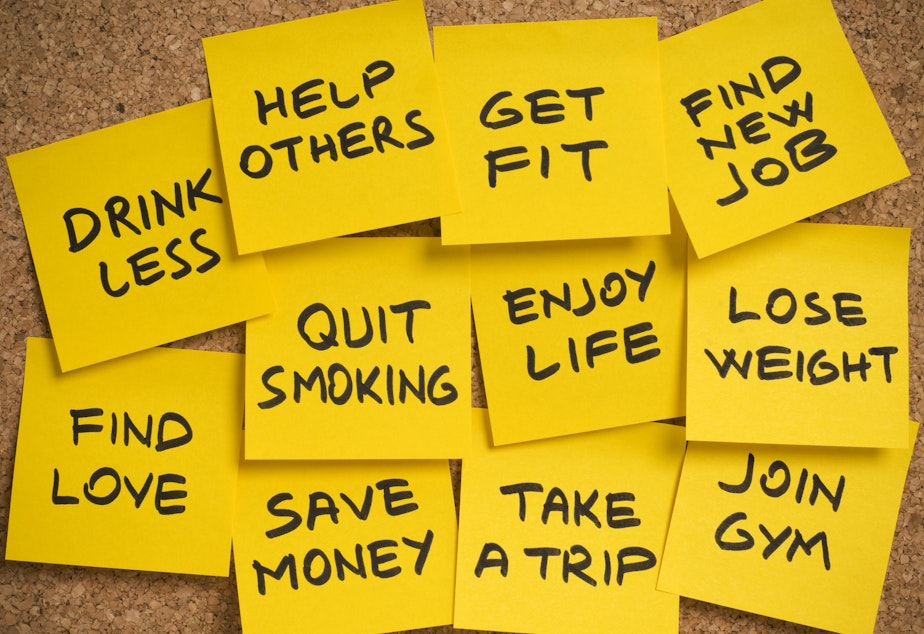
A Surprising Fact about How to Form New Habits


KUOW - Creatures Of Habit: How Habits Shape Who We Are — And Who We Become

How many times have you heard that it takes just a few weeks to develop a new habit? The truth is a bit more complicated than that, but there are scientific ways to help you lock in the changes you want to make.

The myth about behavior becoming automatic in 21 days started when journalists misinterpreted a popular self-help book on Psycho Cybernetics back in the 1960’s. After all, you can probably eat more vegetables starting today, but complex tasks like playing the violin are going to take more than a month to gel.

On the other hand, now is an ideal time to begin forming constructive habits that will enhance your happiness and wellbeing. Take a look at these strategies for learning new behaviors.

Basic Strategies for Habit Formation

Try these tips for easing into your new routines as quickly as possible:

 Plan ahead. Eliminate excuses by plotting out your course in advance. If you want to wake up an hour earlier, go to bed on time, and dream about the invigorating yoga class and delicious breakfast that await you in the morning.

  1. Be consistent. Regularity reinforces itself. Pretty soon it will be easier to go to the gym after work rather than changing your mind, even if it’s raining or your colleagues are heading out for beer and pizza.
  2. Spot triggers. Kicking a habit requires you to notice what happens right before you bite your nails or buy another pair of shoes. Are you bored at work or arguing with your spouse?
  3. Develop substitutions. Once you know your cues, you can choose a different response. Take a walk or invite a friend out for coffee.
  4. Review your reasons. Go over the reasons why you want to adopt your new behavior. Remind yourself about how drinking water instead of soda will help you slim down, strengthen your bones, and save money.
  5. Personalize your goals. While you’re contemplating your reasons, visualize your future self. Focus on what you have to gain instead of just pleasing others.

Advanced Strategies for Habit Formation

What if you’re tackling something as ambitious as managing diabetes or transforming your dead-end dating history?

These ideas will give you an extra boost:

  1. Practice compassion. You’re bound to slip up occasionally. Forgive yourself, and move forward.
  2. Team up. Enlist a friend so you can exchange support and encouragement. Eat lunch with a colleague who is trying to lose weight too.
  3. Write it down. Raise your awareness by keeping a journal about your campaign to stop swearing or start flossing. Note what happens on the days you stick to your program compared to the days when you drift back into old patterns.
  4. Remove temptations. Eliminate the triggers that distract you from your objectives. Clear the junk food out of your kitchen or the cigarettes out of your car.
  5. Design obstacles. Make it difficult to give in to your old tendencies. Leave your credit cards at home to prevent impulsive shopping sprees.
  6. Go on vacation. Leave home for a while. Vacations are an ideal time to forge new habits because you can make a fresh start in different surroundings. Sit down to meditate each morning instead of becoming caught up in searching for lost socks or checking your email.

Make daily exercise and parallel parking so easy you won’t even have to think about them. Positive habits make advantageous choices automatic so you’ll stick with them. You’ll also have more energy to devote to other challenges.

Do You Have a Scarcity Mindset?

When you think of scarcity, what comes to mind? Money? Food? Most of us associate scarcity with tangible necessities. But scarcity can also apply to everything else in life. When you have a scarcity mindset, you may believe there’s not enough opportunity to go around. You may fear (and actively reject) success. It can impact your relationships, career, and personal life in many ways.

And a scarcity mindset is a state of mind where you operate from a place of fear, lack, and worry. The good news is, since it’s a mindset, it’s changeable.

Here’s how you can identify when you’re operating with a scarcity mindset and some ways to shift your mindset to one of abundance.

5 Signs of a Scarcity Mindset

You’re not generous: When you have a scarcity mindset, you cling tightly to what you have because you don’t believe anything more is coming. When you have an abundance mindset, you give freely, knowing that everything you give will come back to you.

You see life as set in stone: Do you ever find yourself saying things like “That’s just the way it is,” “I’m not that kind of person,” or “I could never do that?” When we come from a space of scarcity, we believe that how things have been in the past is how they will always be. But, the truth is that everything is changeable.

You use scarcity language: Do you ever catch yourself saying you’re broke or something is too expensive? Do you say you’re not good enough at something, or you don’t have what it takes to succeed in the field you love? Do you often use words like “can’t” or “impossible?” Unless this language is rare and fleeting, you likely are coming from a scarcity mindset.

You overindulge: On the surface, overindulgence may seem like an action stemming from an abundance mindset. After all, if you binge now, there will still be more later – no need to save. But it can also be a habit ingrained from years of expecting too little. Like you should “enjoy it while you have it.” If you find yourself overindulging often, ask yourself why.

You get jealous easily: Remember that nothing is permanent. That means that most things you would envy in others (cars, homes, vacations, a fit body, a healthy relationship) are things you can still work for and attain – but only with an abundance mindset. Just because others have something you want does not mean you can’t also have it. As the saying goes, it’s not pie.

The reality is that we all come from both scarcity and abundance mindsets. Most of our mindsets fluctuate with circumstances and moments in life.

The best way to get out of a scarcity mindset is with appreciation.

Appreciation is not something that comes naturally to most of us. So, the trick is to start by appreciating the easy things to appreciate – whatever those may be for you. After a while, move on to more challenging things. You will find that you start to see the glass as half full more often than half empty. Appreciation is a muscle that you build with exercise.

How to turn your genes on and off…

We talk a lot about genetics in our society. Our physical features, skills, habits, addictions, health tendencies, and much more can all be traced back to the DNA we got from mom and dad.

But it turns out there’s a lot more to genetics than just our genes.

We are also affected by epigenetics (“epi” is the Greek word for “over the top of”).

Epigenetics is the study of how our behaviors and environment can cause changes that affect the way our genes express themselves. Unlike genetic changes, epigenetic changes are reversible and do not change your DNA sequence. Instead they change how your body reads a DNA sequence.

Epigenetic changes affect gene expression to turn genes “on” and “off.”

Since our environment and behaviors, such as diet and exercise, can result in epigenetic changes, it is easy to see the connection between our genes and our behaviors and environment.

As the Australian Academy of Science puts it, “Just as the same piece of music will change slightly when interpreted by different orchestras, your genetic ‘score’ is interpreted by the epigenetic orchestra.”

What does this mean for you?

Factors like our diet, environment, lifestyle (smoking, drinking, etc.), stress, etc., can affect DNA patterns. For example, you may have the genetic tendency toward eye disease, but you eat a diet rich in vitamin A and never manifest that tendency. Or you have the genetic predisposition toward heart disease, but you exercise consistency in the most optimal way for your unique body and avoid a heart attack.

None of us is bound by a “DNA-Destiny.” We have far more control over our genes than we realize.

Welcome to the Wellness Revolution!

Throughout most of the 21st century, we’ve talked about the wellness industry as something new – starting roughly with the study of nutrition in the 70s and 80s. And it’s certainly true that our current perspective on wellness is a modern take. But wellness has deeper roots. Much, much deeper.

The pursuit of wellness is an ancient, global revolution that predates even the pyramids.

A Brief History of Wellness:

As early as 3,000 BC, the practice of Ayurveda sought to provide harmony between body, mind, and spirit. Yoga and meditation were both foundational components of Ayurveda.

Later, in 500 BC, Greek physician Hippocrates focused on holistic methods to prevent disease, rather than simply treat them. He was also (most likely) the first physician to be outspoken in his belief that illnesses are rooted in poor diets, stress, and lifestyle factors. The Hippocratic Oath was named after him, as he (or one of his students) is believed to be its author.

Between the 1600s and 1900s, a lot of the components of modern wellness began to take shape. Despite Hippocrates’ focus on being well, the term “wellness” wasn’t officially coined until 1650 when it was used to describe the opposite of illness. In the 1700s, a German doctor developed the concept of homeopathy, a radical new way to awaken the body’s natural healing abilities, and in the 1800s, Mary Baker Eddy founded the Christian Science religion – a religion based on the body’s balance and spiritual healing.

The 1800s also brought about the beginnings of chiropractic care and the 1900s gave us naturopathy and the basis for modern evidence-based medicine.

Interestingly, it was only in the last 100 years (give or take) that we shifted from a holistic approach incorporating diet, exercise, meditation, yoga, and breathwork to focus more on a medical approach that emphasizes disease and pathogens. Nevertheless, the belief in wellness has continued to evolve and grow.

In the 1950s, we started learning about the value of eating clean, organic fruits and vegetables. In the 1970s, the first ever Wellness Center was opened in California, and in the 1980s-2000s, we embraced wellness in the mainstream – incorporating wellness practices into our schools, workplaces, and culture.

Welcome to the 21st Century!

In the 21st century, wellness is everywhere. Far from being simply mainstream, it’s been adopted by almost every other industry – from fitness and food to tourism to medicine.

>> Listen to our The Aligned Life podcast where we discuss the wellness movement with Dr. Brown.

Bringing wellness into every area of our lives is deeply human. When we participate in wellness activities – whether it’s in the form of following a healthy diet, reducing our intake of alcohol, drinking enough water or taking class with favorite boutique studio (hint, hint), we’re fulfilling an acutely human desire to reach our full potential, find balance, and heal ourselves from within.

We are so grateful to be able to partner with you on that journey!

Reflection on MLK Day 2021

Today, we are honoring the life and legacy of Dr. Martin Luther King Jr. This year, more than recent years, this holiday seems to call for deep reflection on where we are and how we can move forward.

My father shared the same birthday as MLK – January 15th. And so it is impossible for me to think of King’s legacy without thinking of my father.

My father was born in the 1920s to West Indian immigrants. His father was a laborer on the Panama Canal, whose first wife and 3 children were all killed by Yellow Fever. After the Panama Canal was completed, he invited my grandmother to join him to start a new life in America. I can’t imagine the hopefulness it would have taken to suffer the loss of your entire family and be willing to start again. He died when my father was just 12.

My grandmother went on toiling in anonymity, “scrubbing white people’s floors” to the point that her knees were so badly damaged that she could no longer walk in her old age, so that my father could go to college. Again, I am moved by her hopefulness and faith. At times I am certain it would have been impossible for them to believe that in spite of the deck being stacked against their very survival, they passed on a quality of hope and resilience that led my father to an Ivy League education against every possible odd and obstacle.

My father was one of the countless Black men and women who have struggled and continue to struggle for recognition, meritocracy and equity for whom King is a source of hope and inspiration. Although my father was not a famous man, he was a great man. He was willing to persevere – even to the point of fighting in a war – to fulfill his dream, and manifest his humanity.

What I have learned most from these two great men is that how you live is the most essential aspect of living. And that how you live you live has nothing to do with the conditions that you face.

When your commitment becomes to who you are as an embodiment of the world you want to create, there is no more choice of to struggle or not struggle, to take a stand or not. You will always act on that commitment. For me one of the greatest benefits of being Black is that this aspect of life is explicitly clear. For all of us there is a gap between who we understand ourselves to be and who others see us as being. For Black people this gap can at times be insurmountable.

Some questions for reflection come to mind:

* Have you forged the courage to stand on the side of justice regardless of convenience or result?

* Have you built the capacity to continue (joyfully) when you know the odds are stacked against you?

* Have you developed the ability to struggle with dignity and self-assurance irregardless of how you’re seen?

* Have you opened your heart to see the ugly side of others in yourself and recognize the humanity?

For both King and my father the election of Barack Obama was unimaginable. And the election of Kamala Harris was even more so.

The inauguration of President Obama was one of the most incredible experiences I have had. Millions of people peacefully congregating, celebrating and for many of us for the first time feeling like change had come. It was an existential moment: the feeling that new horizon that we didn’t know existed had opened. We will miss that opportunity this week to celebrate what was once unimaginable.

Of course the reaction to the election of the first Black President was forceful and profoundly disappointing.

Many allowed the rise of hate and failed to answer the call to take hard stands for justice and harmony. Too many made lesser evil choices that Black people ended up on the down side of yet again.

Over recent days we have watched white supremacists and their allies mount a very real insurgency against our government. This was in part a violent reaction to seeing the values that we, the Align community, hold dear manifesting in the world around us. Diversity, acceptance, belief in the inherent value of every individual, peace, justice, love without limit were every bit as much being challenged as democracy itself, because white supremacy will never allow for any of these things.

As a wellness studio, we believe that justice is essential for well-being; and that well-being is essential for justice – they are inextricably linked. We wholeheartedly believe that when we come together as a community (albeit virtually) and we work together to master the skills of authenticity, self-love, connection, humanity, and resilience, we will find and take the actions necessary to realize our vision for peace and justice for all humanity. Yes, we will find the way forward toward our new world without knowing our next step.

“The arc of the moral universe is long, but it bends toward justice.”

“Faith is taking the first step, when you don’t see the whole staircase.”

“I have a dream.”

XO Pam

How “Anchor” Habits Can Keep You Sane

You may have heard that 53% of adults in the US report that their mental health has been negatively impacted due to worry and stress over the pandemic. 36% reported difficulty sleeping, and 32% reported difficulty maintaining a healthy diet.

Sadly, mental health issues are only increasing as the pandemic wears on. Public health measures have meant that many of us are experiencing isolation and job loss, both of which are linked to poor mental health.

Possibly, the most important thing that any of us can do to make it through this winter will be to create routines.

Routines create the known as we are faced each day with the unknown. During the pandemic the whole world has been knocked off kilter and many of our routines have shifted or collapsed. Commitment to routines are a key to maintaining sanity and enhancing our resilience.

Routines are important because:

  • They create structure – A daily routine often begins with an alarm clock going off to start our day, and the habits follow from there with showering, brushing our teeth, dressing and grabbing a coffee.
  • They give us a sense of accomplishment – Routines typically have a beginning and an end. We naturally plan our days with them as priorities.
  • They let us know how we are doing – Even small routines like showering, brushing our teeth, and dressing are important parts of our day. During the pandemic, many of us have taken a more relaxed approach to those daily habits, such as working from home in leggings. This kind of small change can actually have big impact on how we feel.
  • They let people around us know how we are doing – Routines also are indications to people around us of how we are doing. Before the pandemic, if you didn’t show up for work your colleagues would surely worry. With no routine, there are a lot of unknowns that can cause concern or anxiety.

Last week on The Aligned Life podcast I talked with Align Brooklyn community member and psychologist, Anna Levy-Warren about the importance of routines.

Anna recommends that we use routines to create “anchors in the day so that we always know that we have a beginning, middle and end.”

>> Listen to the full episode to learn how to support yourself, children and family’s mental wellbeing.

>> Find out more about Anna’s work.

Here are some ideas for daily routines:

  • go to sleep and wake up at the same time
  • connect with one friend (phone, text, IRL, online)
  • eat breakfast, lunch and dinner at the same time each day
  • go for a 15 minute walk at the same time each day
  • read a book for 10 minutes in the morning or evening
  • write in your journal in the morning or before bed
  • take a yoga or fitness class at the same time each day
  • spend 10 minutes on breath work or meditation when you wake up or before going to sleep

There’s a unique routine that is right for you; take a few minutes to think about one habit to add to your day.

Wellness is really found as a set of habits and routines that we commit to long term.

Inside the Aligned Life membership we use habit-based wellness programming to support you at creating routines to optimize your wellbeing. For more information visit this link.

Don’t forget to take a moment to download Anna’s free checklist on how to optimize home learning!

Can’t Seem to Catch Your Breath?

When you think about breathwork, you may immediately think about yoga or meditation, but intentional breathwork has so many more applications for your health and happiness.

Here are 3 ways you can harness the power of your breath for balance and wellness: 

Breathwork for Stress: Countless studies have proven the benefits of breathwork for managing stress; I won’t repeat them here. Trust me when I say that focusing on your breath as part of a morning or evening practice can help you manage long-term stress and give you more resilience to manage in-the-moment stressors.

To get started, try box breathing: Breathe in for four seconds, hold it at the top of your breath for four seconds, slowly breathe out for four seconds, then hold at the bottom of your breath for four seconds. Repeat for several minutes every day.

Breathwork for Grounding: In their acclaimed book “How We Choose to be Happy,” authors Greg Hicks and Rick Foster outline their 9-step system for finding happiness.

Step #1, the foundation for the entire program, is intention. When we approach our lives intending to find happiness, we inevitably discover more happiness. They recommend taking a split second before every single task to choose your intention.

I’d like to extrapolate that out a bit to suggest taking a few deep breaths every time you begin a new task. These deep breaths give you a moment of clarity to recenter and redefine your intention. It’s a simple way to become more present and grounded every day.

Breathwork for Health: The benefits of breathwork go far beyond stress relief and meditation. Regularly practicing breathwork is linked to boosted immunity, improved self-esteem and confidence, more self-awareness, better sleep, improved digestion, and even relief from chronic pain. Deep breathing can also help expel toxins and keep your body in optimal shape.

There are many ways to practice breathwork. Take some time to experiment and find what works for you.

Looking forward to seeing you at the (virtual) studio soon!

PS – Want a partner in your wellness journey even while you’re stuck at home? Learn more about The Aligned Life here. We’ve taken all the love and care of our wellness practice and built an entirely new online experience that takes the “chore” out of at-home workouts.

Community In the Time of COVID

Shortly before the Covid crisis began, NAMI (National Alliance of Mental Illness) released an article outlining the importance of community for mental health. The article points out the necessity of social connections for humans. From an evolutionary perspective, we’ve always required healthy communities to survive – to divide the responsibilities of hunting, gathering, and child-rearing.

In the modern world, we may be able to physically survive without those connections, but our mental health takes a terrible toll. Community engagement gives us a sense of belonging, a support network when things are hard (hello, quarantine), a sense of purpose, an opportunity to give through volunteering, and a way to work through concerns and problems with conversation and feedback.

Little did NAMI know (really, little did ANY of us know) how much we would need community and connection in 2020. Right now, the ability to connect with our communities in person is borderline impossible. The most you can do is take a socially distanced walk outside with a friend, but without the ability to hug, touch, or even speak without a mask, it’s not the same.

But even though you can’t get ALL the benefits of community in quarantine, it’s still vital to seek out community for your mental health.

You may not be able to touch physically, but you can still:

Find common interests: You can download the Discord app to join local communities, play your favorite PC games, or even have virtual watch parties. Meetup.com also offers ways to meet digitally, through Zoom.

Help your neighbors: The Nextdoor app lets you communicate with your neighbors about activities in your neighborhood, learn about food drives and volunteer opportunities, and more.

At the food drive held during COVID-19, the woman with the face mask holds a bag full of food.

Take care of your mental health: Counseling apps like Better Help make it easy to talk to someone about stress, anxiety, depression, and anything else you’re experiencing due to being more isolated than usual.

You can also stay connected with like-minded, wellness-focused peers through our Align Your Life membership. Every month, we focus on a different theme to help you thrive. This month, we’re focusing on Resilience.

Click here to learn more about The Aligned Life membership.